October 20, 2026, OTTAWA – Prime Minister Mark Carney has presented the protection of French
language and culture as a red line in negotiations with Donald Trump. Today, the Canadian Association
of Professional Employees (CAPE), alongside other federal public sector unions, members of Parliament,
and French organizations, demanded that the Carney government apply that same commitment at
home, where cuts, unreliable AI, outsourcing, and unsafe working conditions are degrading the federal
language services that uphold francophones’ rights, language, and culture.
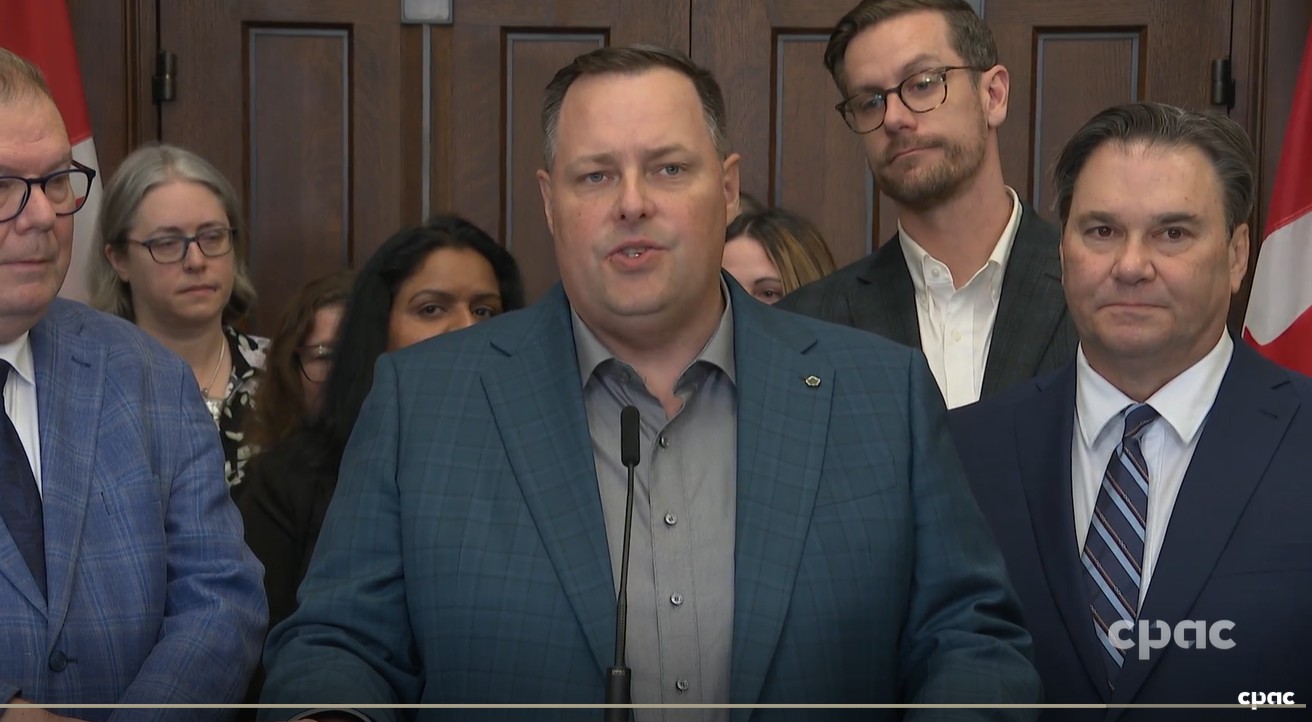
At a press conference on Parliament Hill, CAPE, the Public Service Alliance of Canada (PSAC), the
Professional Institute of the Public Service of Canada (PIPSC), MP and Bloc Québécois Whip Yves Perron,
MP and Bloc Québécois Official Languages critic Mario Beaulieu, MP and NDP Labour Critic Don Davies,
and the International Association of Conference Interpreters (AIIC) stood in solidarity to demand that
Carney match his public defence of French against Trump with investment in the translators,
interpreters, and terminologists who protect French language rights at home. They called on his
government to reverse cuts and properly resource federal language services so francophones can have
equal access to public services, follow parliamentary proceedings, and participate fully in Canadian
democracy in their own language.
Federal language experts – the 800 translators, interpreters and terminologists represented by CAPE –
begin negotiations for their next collective agreement on October 21, after their last agreement expired
in April. Their bargaining demands connect working conditions directly to the protection of French:
enforceable AI safeguards, manageable workloads, safe working conditions, enshrined quality
standards, and language work brought back into a properly resourced public service.
The Translation Bureau’s plan to cut 25 per cent of its workforce over five years is already creating a
vicious cycle: translators are being forced to cut corners in the name of “good enough”, undermining
their professional integrity and causing burnout, as well as damaging the quality standards needed to
ensure equal access to services in both official languages. Since more than 90 per cent of translations in
the federal government are done from English to French, this directly risks creating a two-tier system
where francophones are treated as second-class citizens and substantive equality between the two
official languages is threatened.
In her Annual Report 2025-2026 released on October 8, Official Languages Commissioner Kelly Burke
recognizes the English bias of AI tools and calls for official languages to be integrated into all the federal
government’s AI strategies, policies and resources.
On October 19, CAPE launched a public campaign blanketing Quebec and the National Capital Region
with online and bus stop advertisements demanding that Carney stop paying lip service to the Official
Languages Act as he quietly dismantles the linguistic services that keep French language rights alive.
QUOTES
“Carney can’t say he’s protecting French while cutting workers whose work is required to ensure
francophones have equal access to public services. As the translators, interpreters, and terminologists of
the Translation Bureau, we are bargaining for the safeguards and working conditions that allow us to
protect and maintain the integrity of official languages in Canada. We want an agreement that ensures
our professional integrity and our judgment are never sacrificed in the name of “good enough”. -Antoine Hersberger, TR Vice-President, CAPE
“Protecting French language rights requires investing in the public services and workers who make those
rights a reality. Instead, Prime Minister Carney is cutting translation services and relying on AI and
outsourcing, putting public sector jobs at risk. The NDP stands with federal translators, interpreters and
terminologists: their work is vital to a truly bilingual country, and they deserve the resources,
protections and working conditions to do it well.” -Avi Lewis, Leader, NDP
“We work in a bilingual workplace, yet this federal government is weakening the very tools that ensure
everyone has access to quality language services. That’s a failure to uphold its responsibility to Canada’s
official languages. We stand with federal translators, interpreters and terminologists fighting to protect
their jobs and their right to a healthy and safe workplace. AI and private contractors cannot replace their
expertise, judgment and accountability. The government should be strengthening these essential public
services—not outsourcing them and putting language services at risk.” -Sharon DeSousa, National President, PSAC
“Canadians deserve high-quality language services that protect their rights and ensure full participation
in democracy. That takes skilled, accountable experts—not cuts, outsourcing or AI replacing qualified
workers. The government should be strengthening these essential services, not putting rights, safety
and jobs at risk.” -Sean O’Reilly, President, PIPSC
“This is about more than a labour dispute; it’s the fight for the integrity of our public services. Cuts,
outsourcing, and unreliable AI are stripping public institutions of the expertise they need to serve
francophones and uphold their rights. This is a fight for the French language and culture in Canada.
Translators, interpreters, terminologists, and assessors are public service workers who care deeply
about their work. Public sector unions stand united with them all. Protecting the services that
francophones—and all Canadians—rely on means protecting the people who deliver them.” -Ruth Lau MacDonald, Regional Executive Vice-President, PSAC-NCR
“AIIC-Canada stands with our colleagues at the Translation Bureau, many of whom are active members
of our Association. By protecting interpreters, we protect every Canadian’s right to be heard and
understood in the language of their choice. Yet the cuts, the degradation of our working conditions, and
the threats to our health and safety directly jeopardize the quality and long-term viability of our
services.” -Alionka Skup, President, International Association of Conference Interpreters – Canada Region